
Consulting Practice
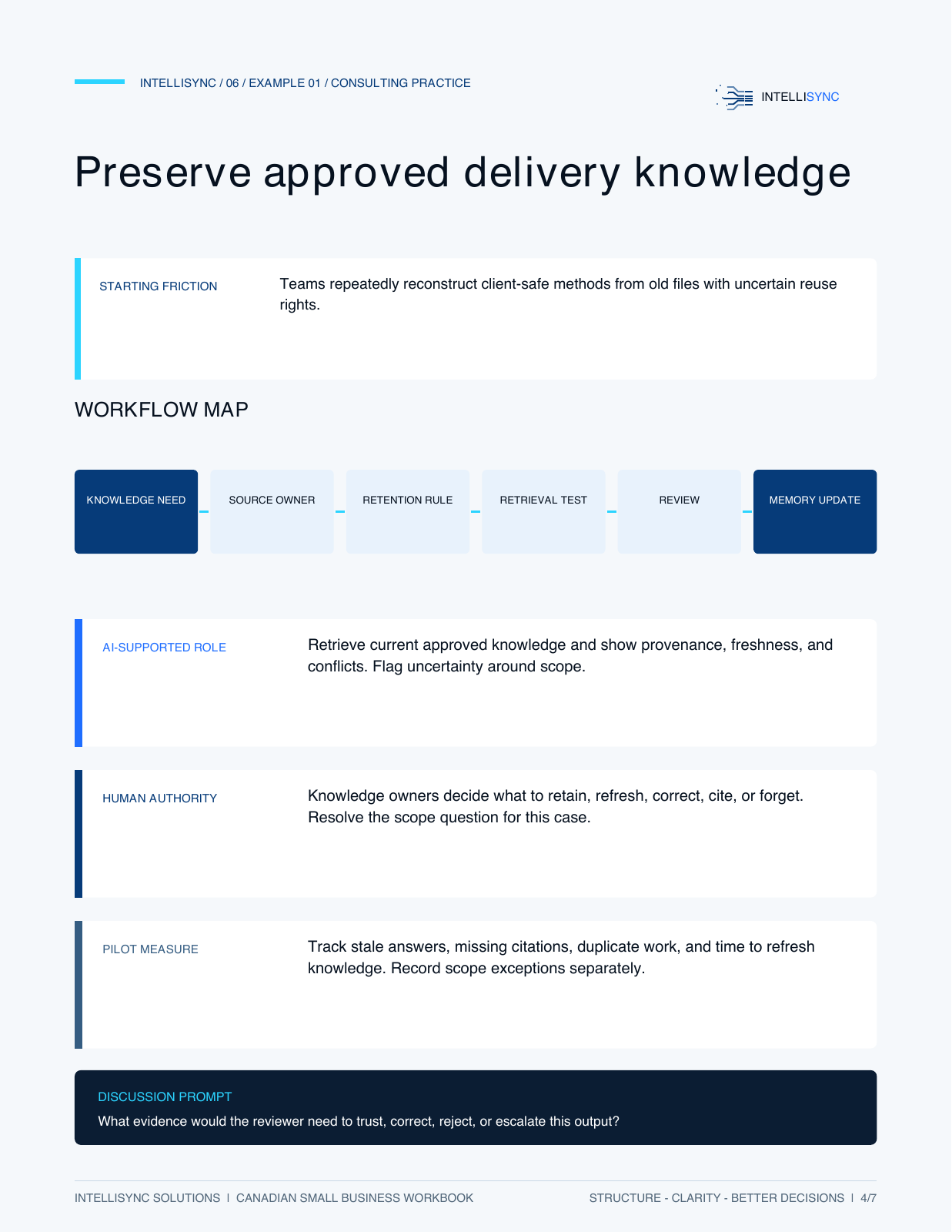
Preserve approved delivery knowledge
Teams repeatedly reconstruct client-safe methods from old files with uncertain reuse rights.
Free Canadian small business workbook
Decide what knowledge AI should preserve, retrieve, refresh, forget, and cite.
7 pages · PDF workbook · No email required
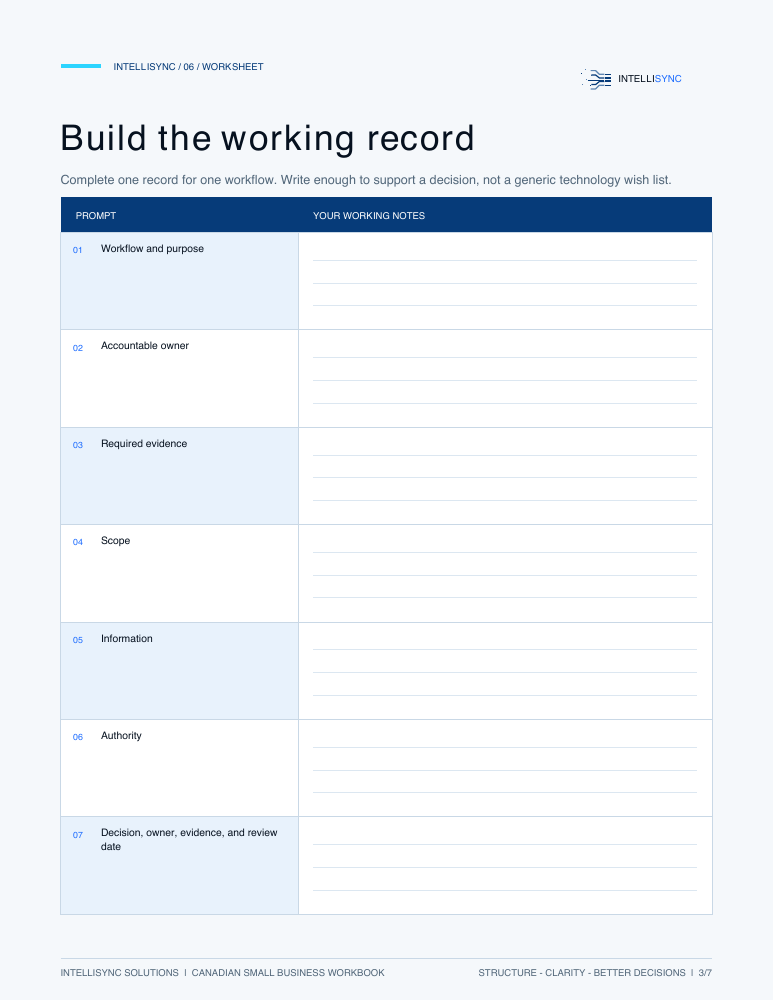
Scroll through the full workbook below. Download the PDF for selectable text, printing and your own working copy.
What’s inside
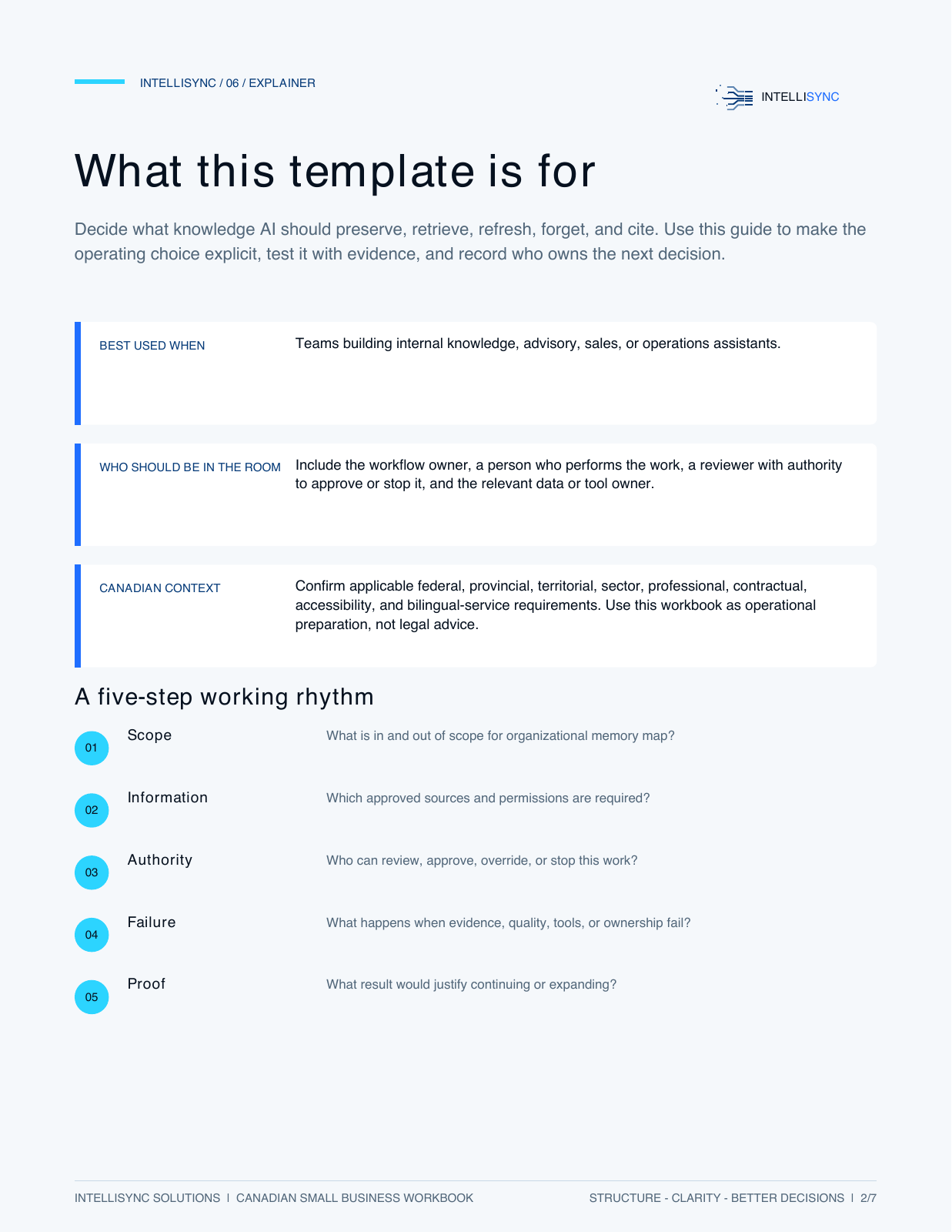
Decide what knowledge AI should preserve, retrieve, refresh, forget, and cite. Use this guide to make the operating choice explicit, test it with evidence, and record who owns the next decision.
Teams building internal knowledge, advisory, sales, or operations assistants.
Include the workflow owner, a person who performs the work, a reviewer with authority to approve or stop it, and the relevant data or tool owner.
Includes an explainer, working worksheet, three illustrative examples and practical considerations. This is a planning PDF, not prebuilt automation software.
Use it with your own work
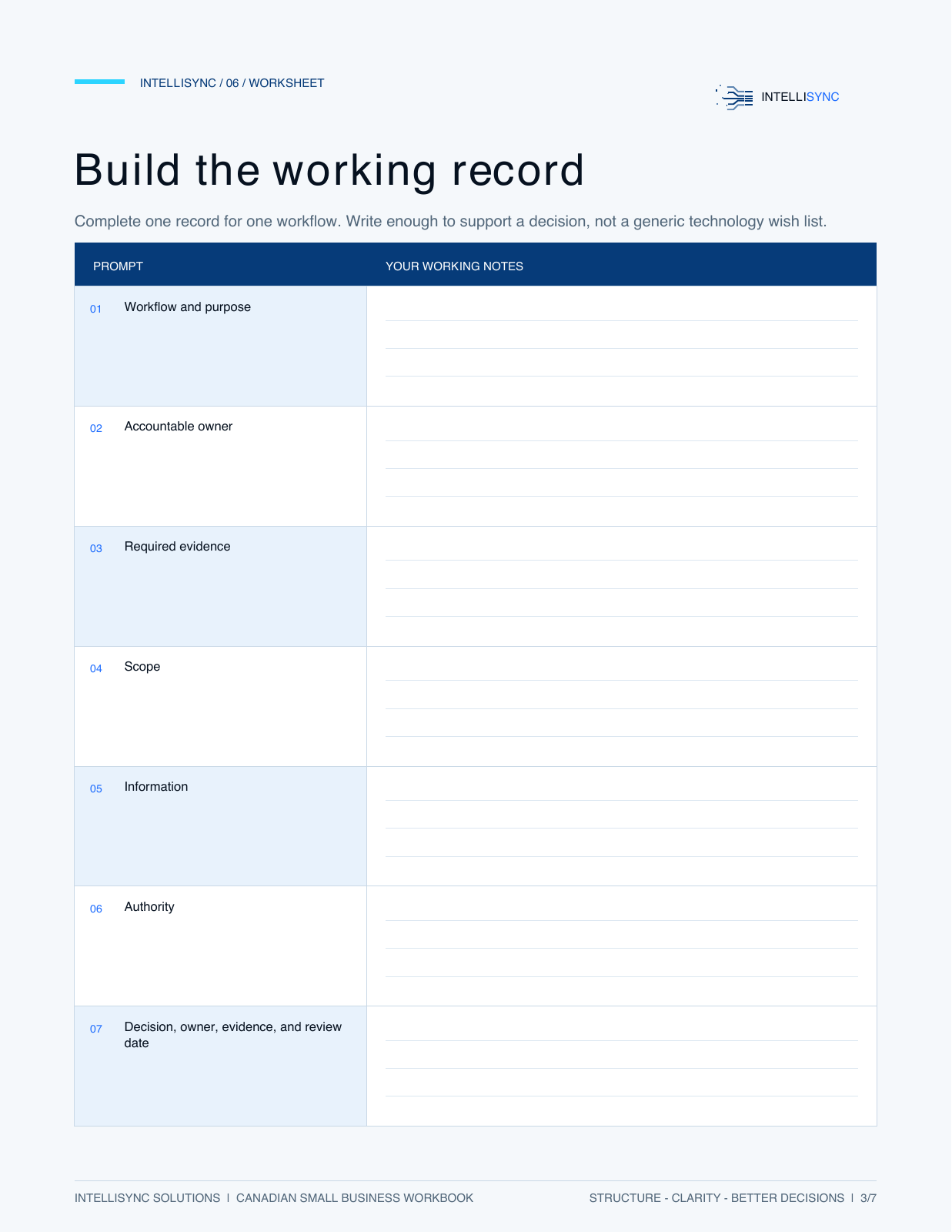
Choose one workflow. Record enough context to support a decision, then use the worksheet to name the owner, evidence and next review.
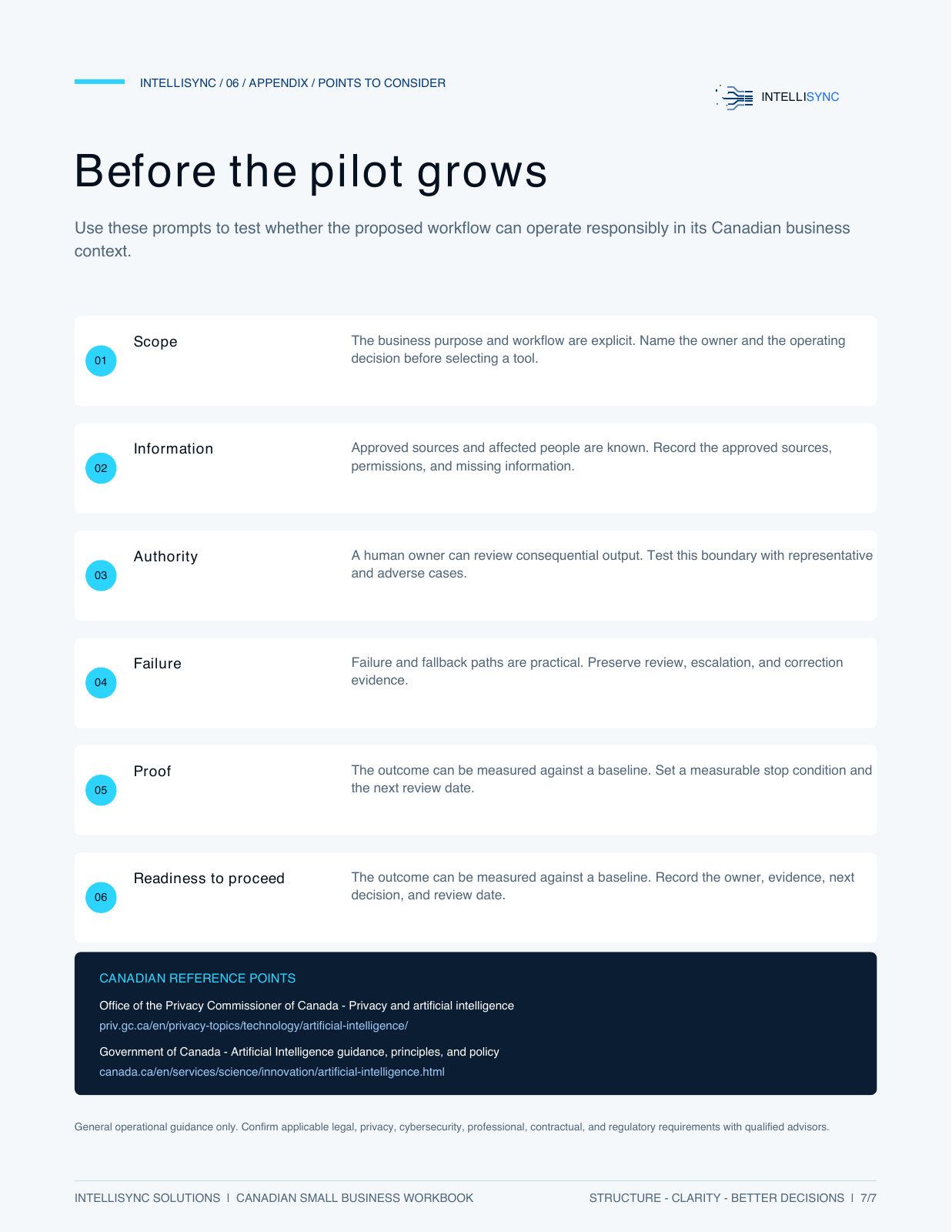
What is in and out of scope for organizational memory map?
Which approved sources and permissions are required?
Who can review, approve, override, or stop this work?
What happens when evidence, quality, tools, or ownership fail?
What result would justify continuing or expanding?
Illustrative examples from the workbook
Consulting Practice
Teams repeatedly reconstruct client-safe methods from old files with uncertain reuse rights.
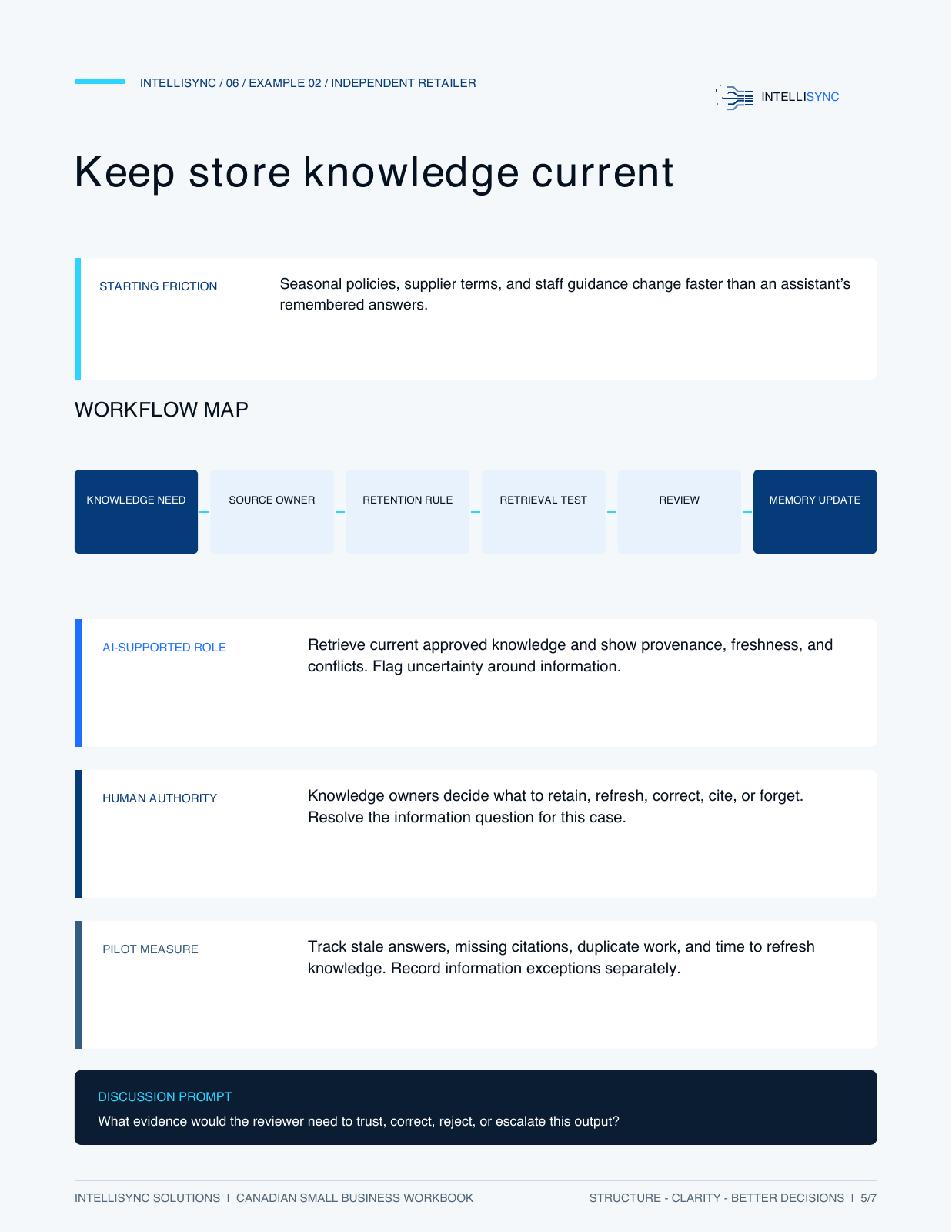
Independent Retailer
Seasonal policies, supplier terms, and staff guidance change faster than an assistant’s remembered answers.
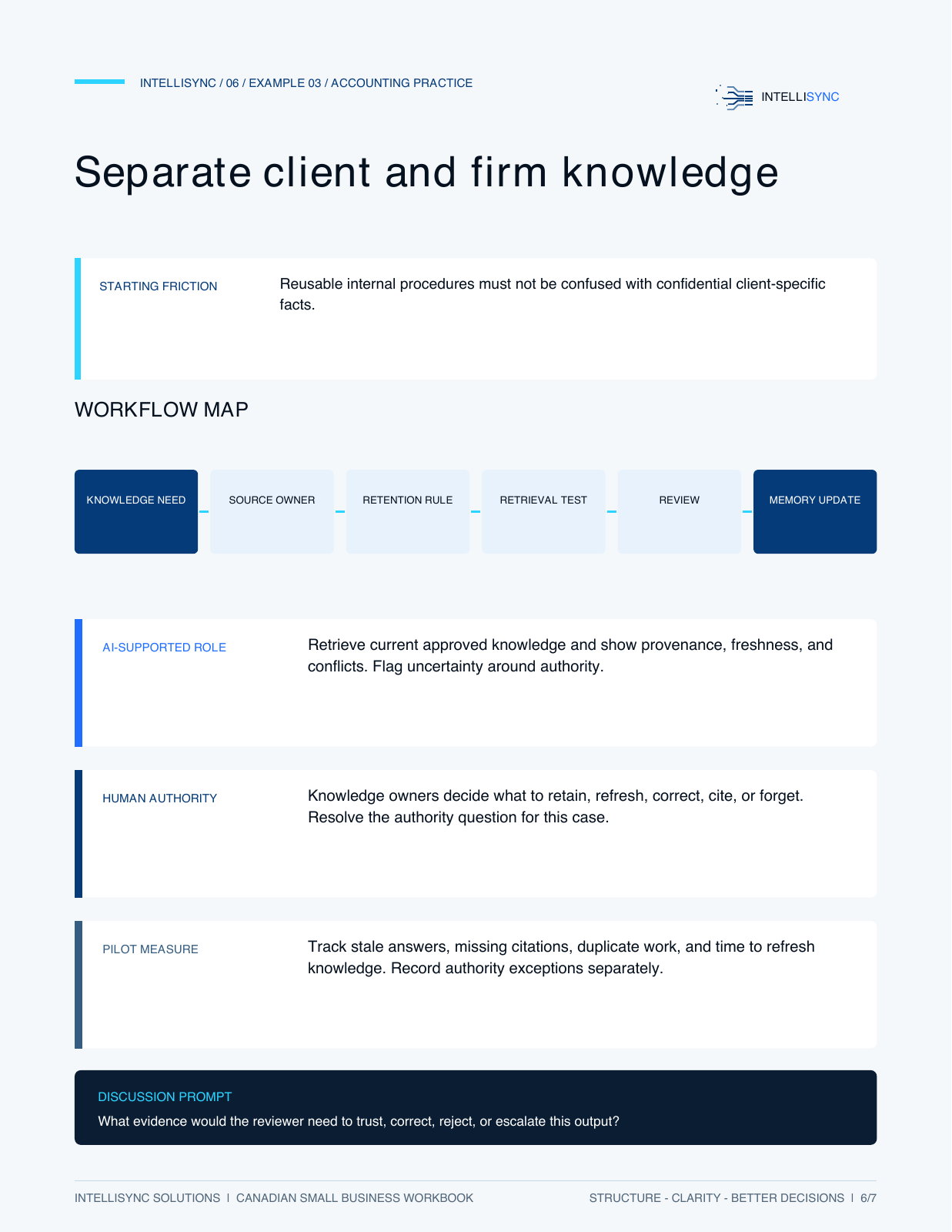
Accounting Practice
Reusable internal procedures must not be confused with confidential client-specific facts.
Illustrative scenarios, not client results or a promise of performance. The workbook includes additional case-specific prompts.
A useful first step
Download and use it without booking a call. If you want help applying it, email Chris with the workflow you’re considering and what you want to improve.
Discuss your workflowGeneral operational guidance only. These resources are not legal, privacy, cybersecurity or regulatory advice.