
Consulting Practice
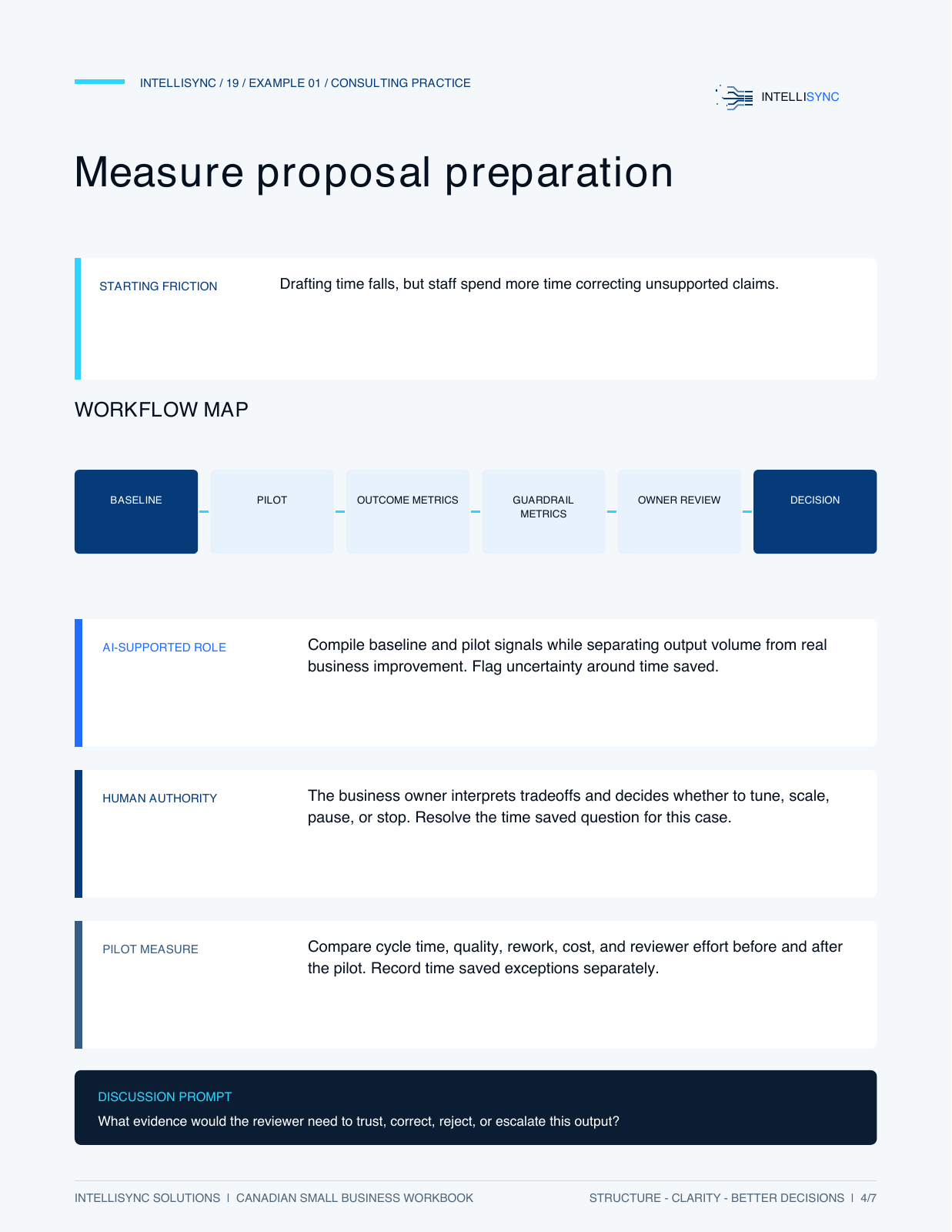
Measure proposal preparation
Drafting time falls, but staff spend more time correcting unsupported claims.
Free Canadian small business workbook
A worksheet for defining what better means before an AI workflow becomes a business case.
7 pages · PDF workbook · No email required
Scroll through the full workbook below. Download the PDF for selectable text, printing and your own working copy.
What’s inside
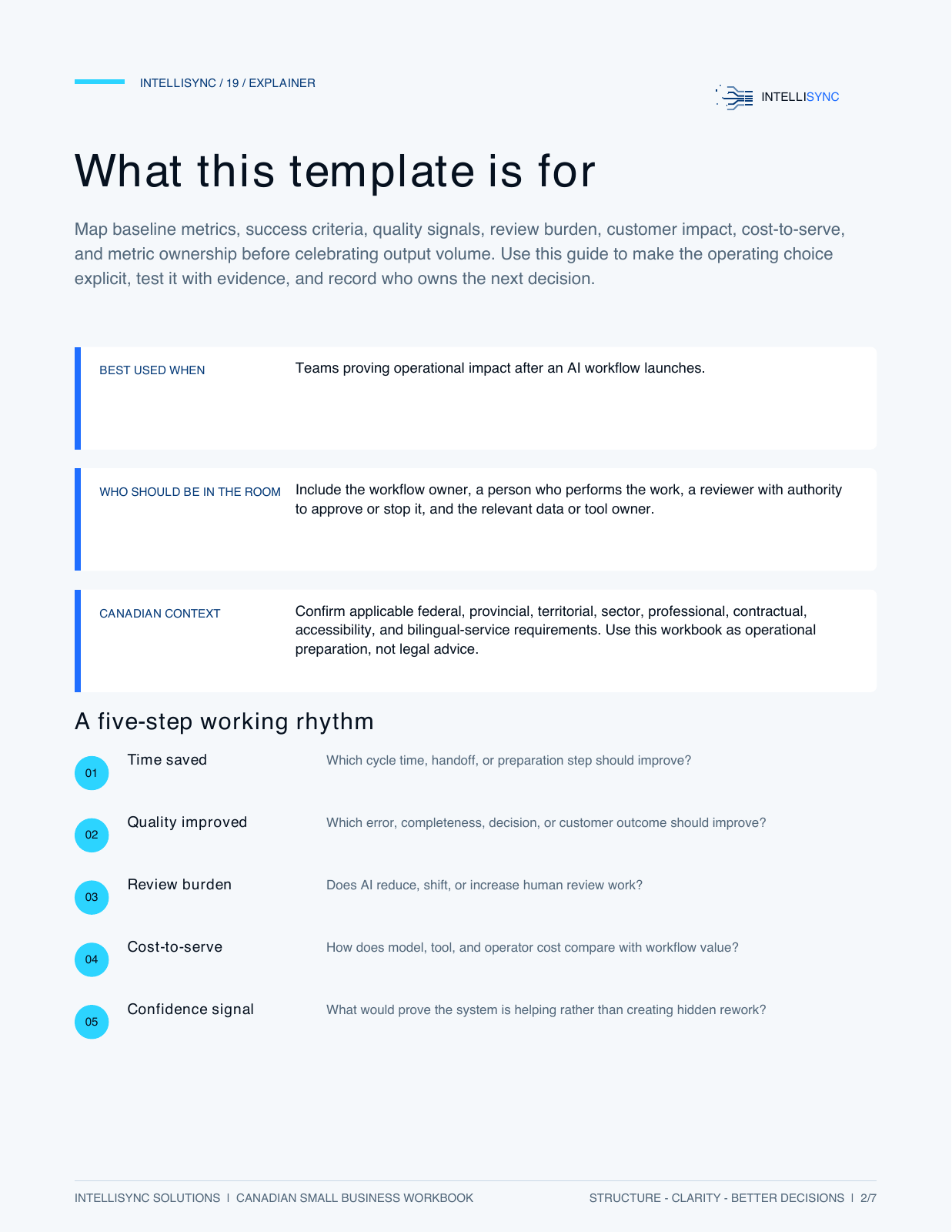
Map baseline metrics, success criteria, quality signals, review burden, customer impact, cost-to-serve, and metric ownership before celebrating output volume. Use this guide to make the operating choice explicit, test it with evidence, and record who owns the next decision.
Teams proving operational impact after an AI workflow launches.
Include the workflow owner, a person who performs the work, a reviewer with authority to approve or stop it, and the relevant data or tool owner.
Includes an explainer, working worksheet, three illustrative examples and practical considerations. This is a planning PDF, not prebuilt automation software.
Use it with your own work
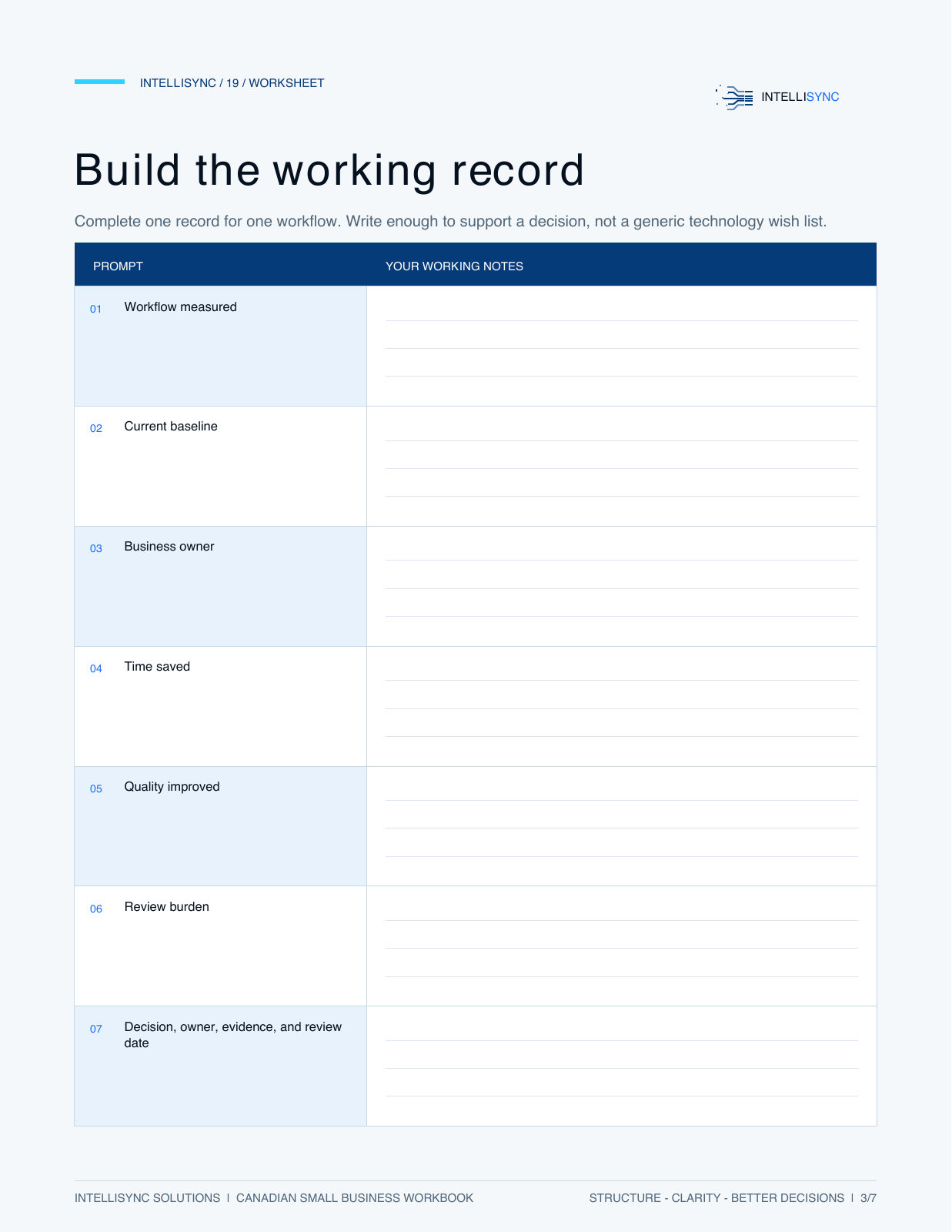
Choose one workflow. Record enough context to support a decision, then use the worksheet to name the owner, evidence and next review.
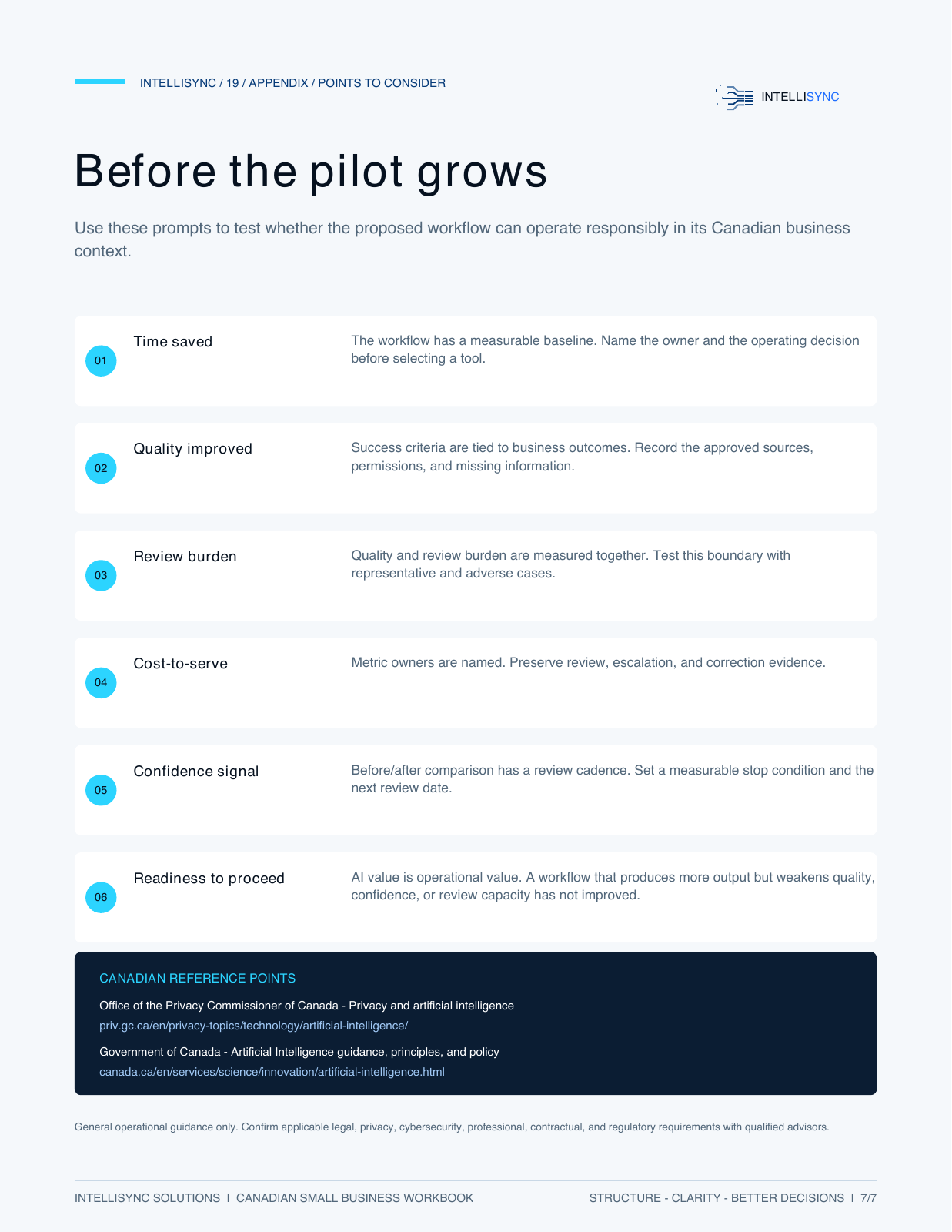
Which cycle time, handoff, or preparation step should improve?
Which error, completeness, decision, or customer outcome should improve?
Does AI reduce, shift, or increase human review work?
How does model, tool, and operator cost compare with workflow value?
What would prove the system is helping rather than creating hidden rework?
Illustrative examples from the workbook
Consulting Practice
Drafting time falls, but staff spend more time correcting unsupported claims.
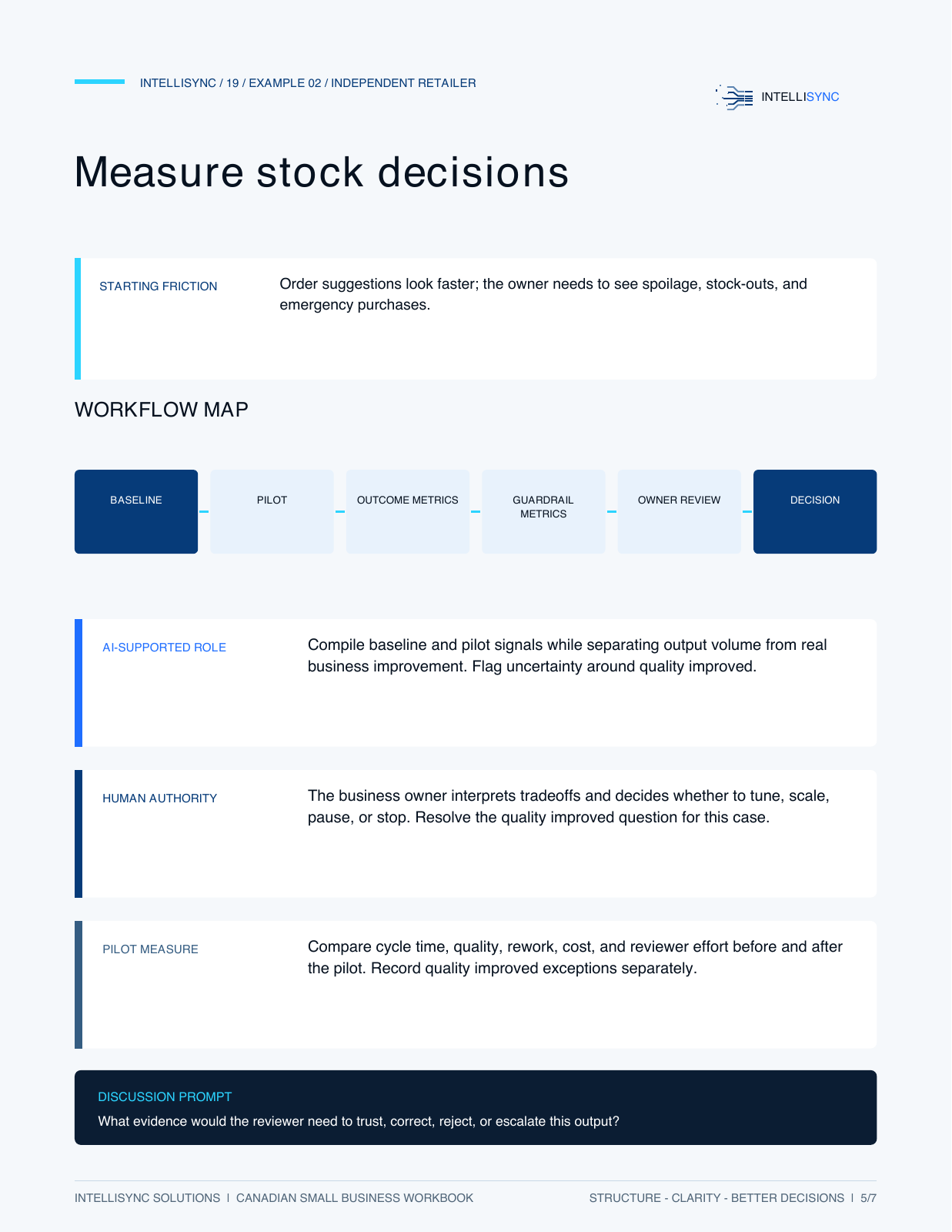
Independent Retailer
Order suggestions look faster; the owner needs to see spoilage, stock-outs, and emergency purchases.
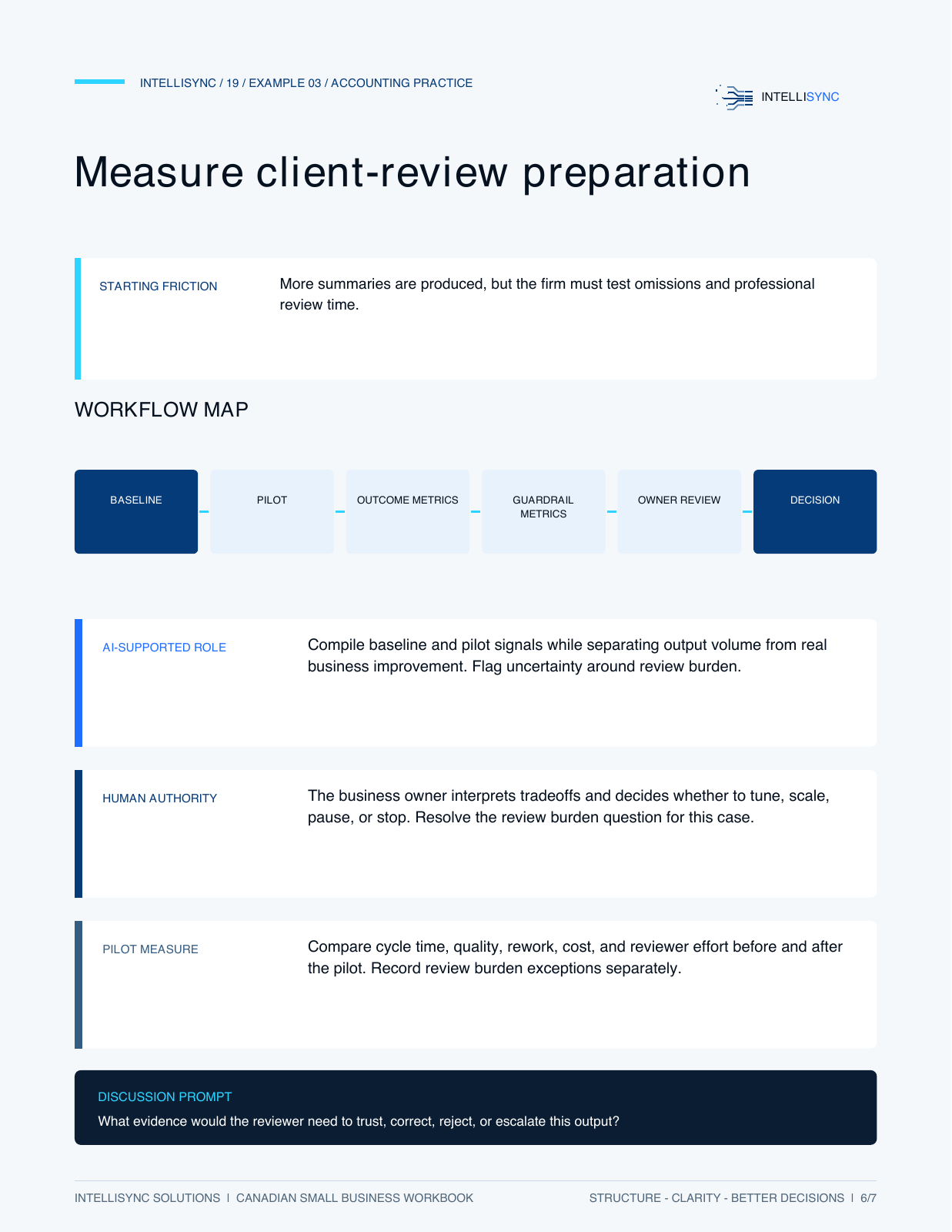
Accounting Practice
More summaries are produced, but the firm must test omissions and professional review time.
Illustrative scenarios, not client results or a promise of performance. The workbook includes additional case-specific prompts.
A useful first step
Download and use it without booking a call. If you want help applying it, email Chris with the workflow you’re considering and what you want to improve.
Discuss your workflowGeneral operational guidance only. These resources are not legal, privacy, cybersecurity or regulatory advice.