
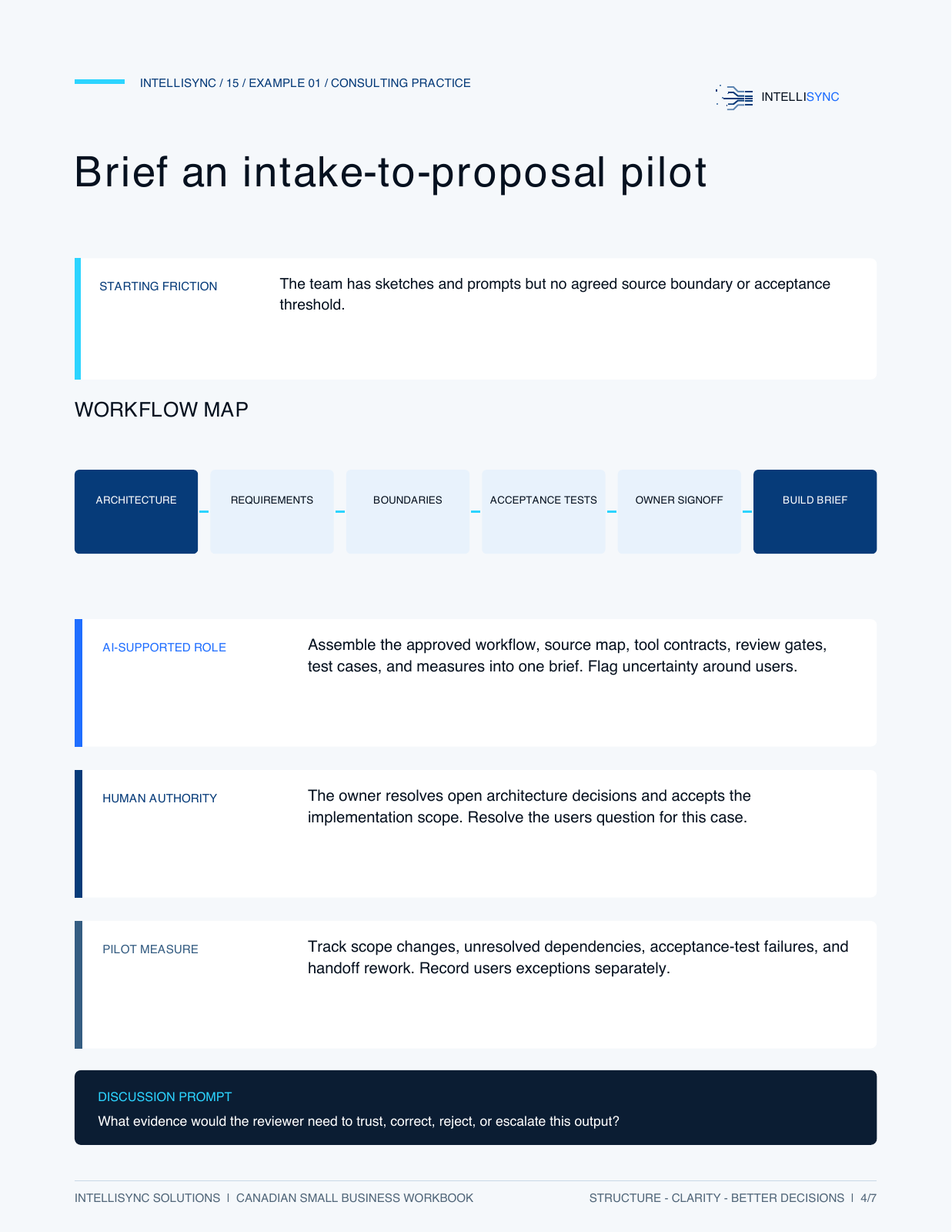
Consulting Practice
Brief an intake-to-proposal pilot
The team has sketches and prompts but no agreed source boundary or acceptance threshold.
Free Canadian small business workbook
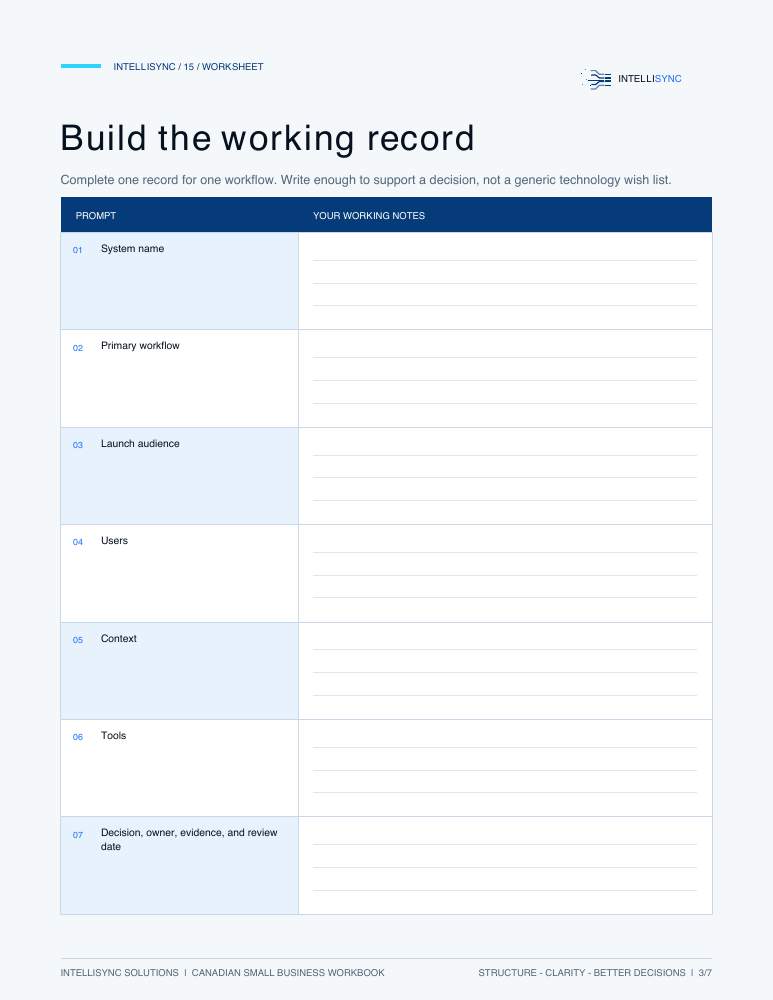
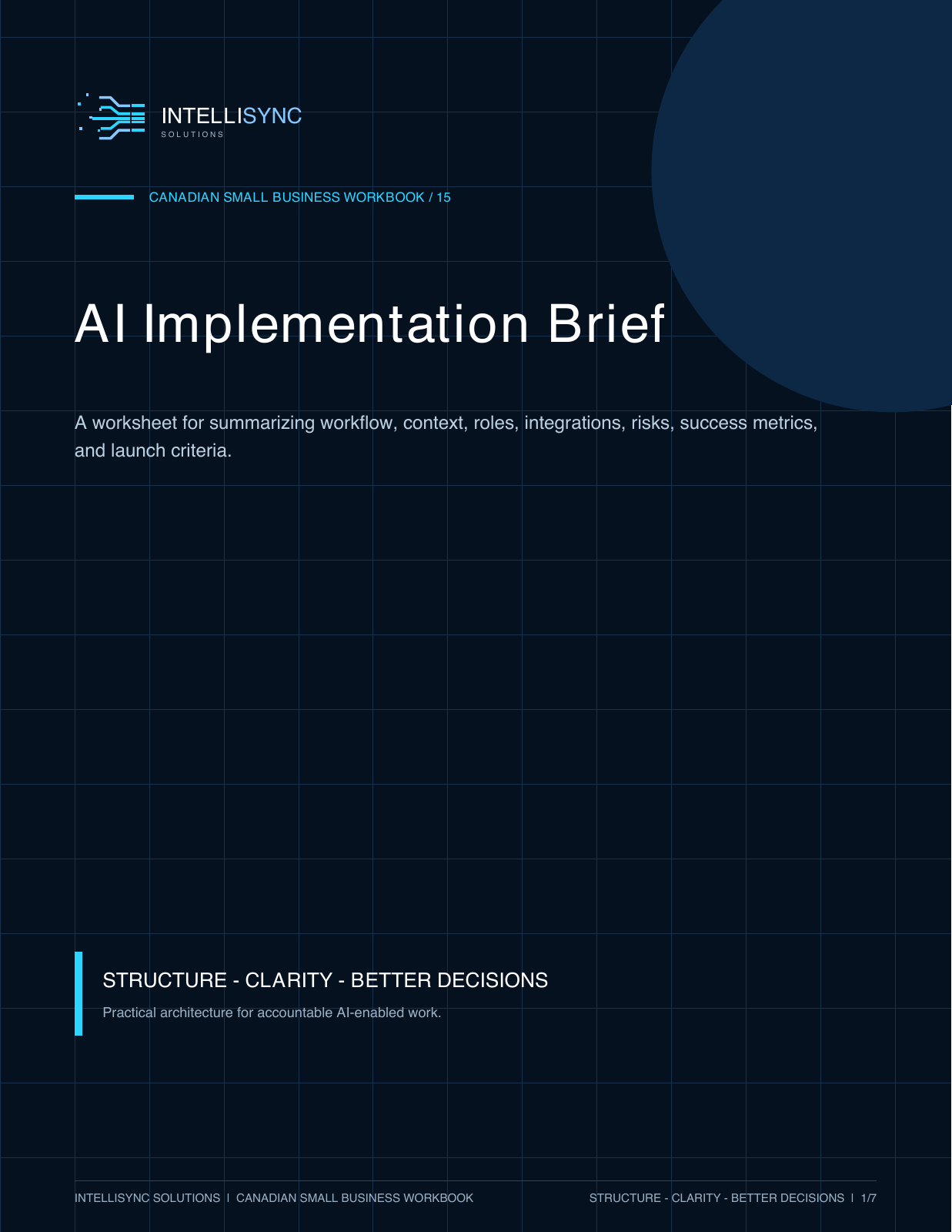
A worksheet for summarizing workflow, context, roles, integrations, risks, success metrics, and launch criteria.
7 pages · PDF workbook · No email required
Scroll through the full workbook below. Download the PDF for selectable text, printing and your own working copy.
What’s inside
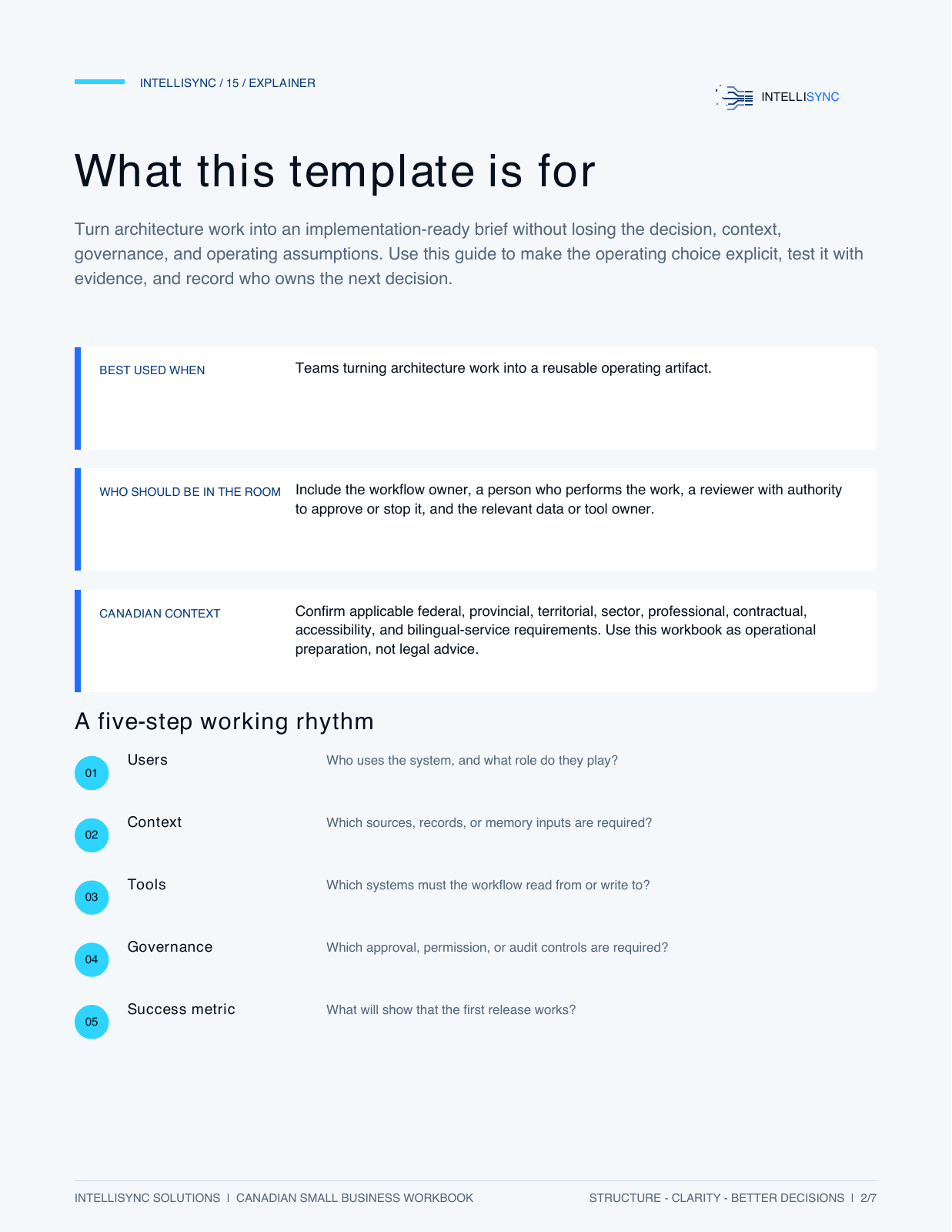
Turn architecture work into an implementation-ready brief without losing the decision, context, governance, and operating assumptions. Use this guide to make the operating choice explicit, test it with evidence, and record who owns the next decision.
Teams turning architecture work into a reusable operating artifact.
Include the workflow owner, a person who performs the work, a reviewer with authority to approve or stop it, and the relevant data or tool owner.
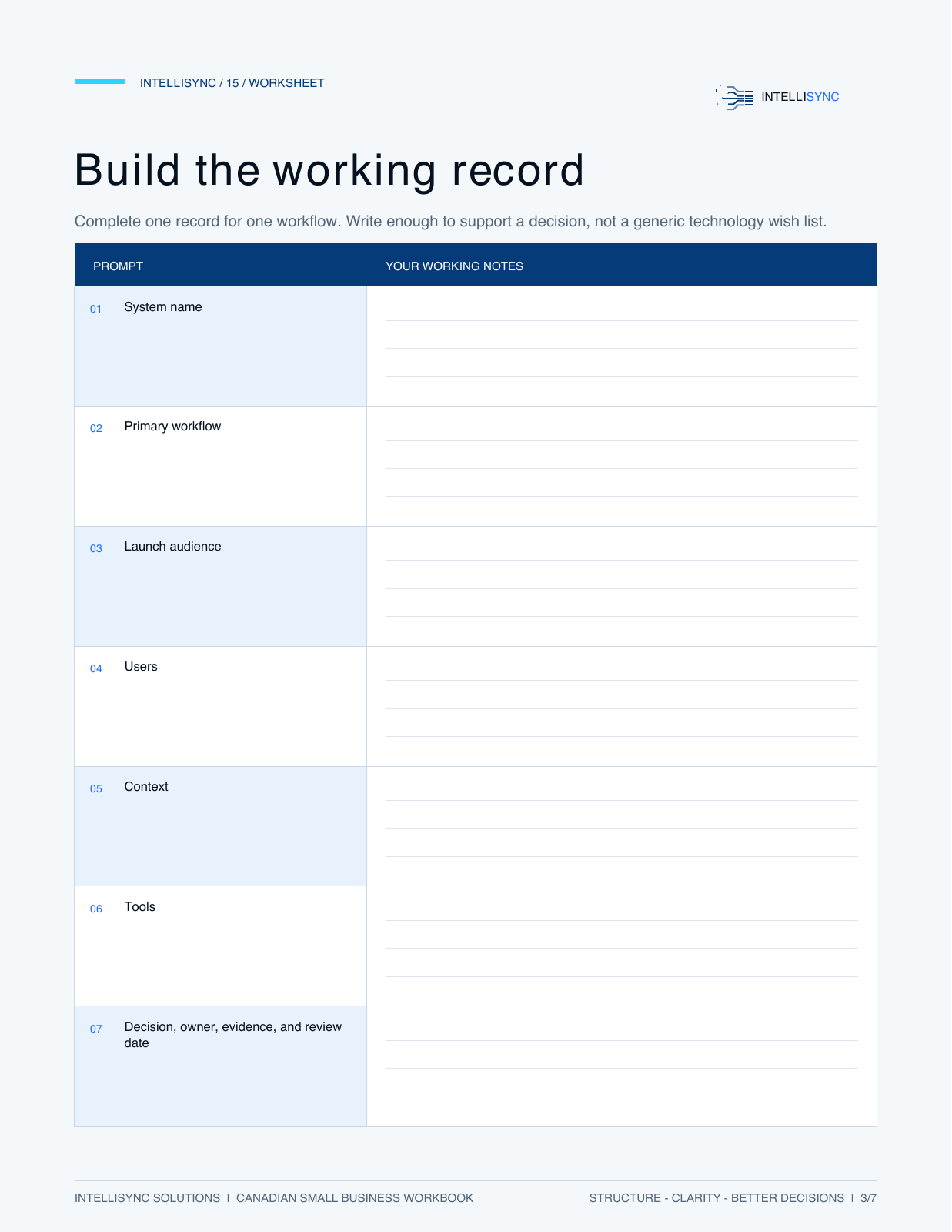
Includes an explainer, working worksheet, three illustrative examples and practical considerations. This is a planning PDF, not prebuilt automation software.
Use it with your own work
Choose one workflow. Record enough context to support a decision, then use the worksheet to name the owner, evidence and next review.
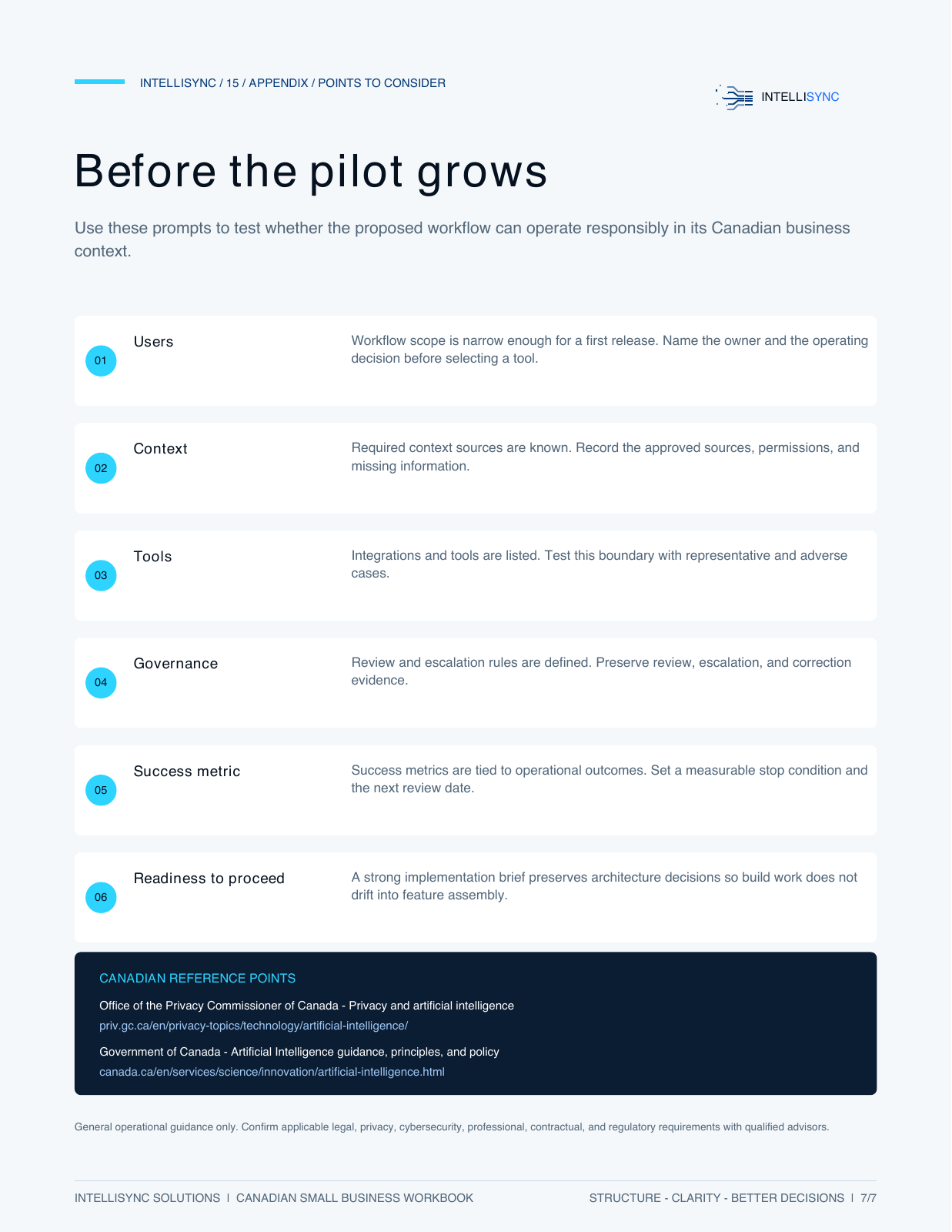
Who uses the system, and what role do they play?
Which sources, records, or memory inputs are required?
Which systems must the workflow read from or write to?
Which approval, permission, or audit controls are required?
What will show that the first release works?
Illustrative examples from the workbook
Consulting Practice
The team has sketches and prompts but no agreed source boundary or acceptance threshold.
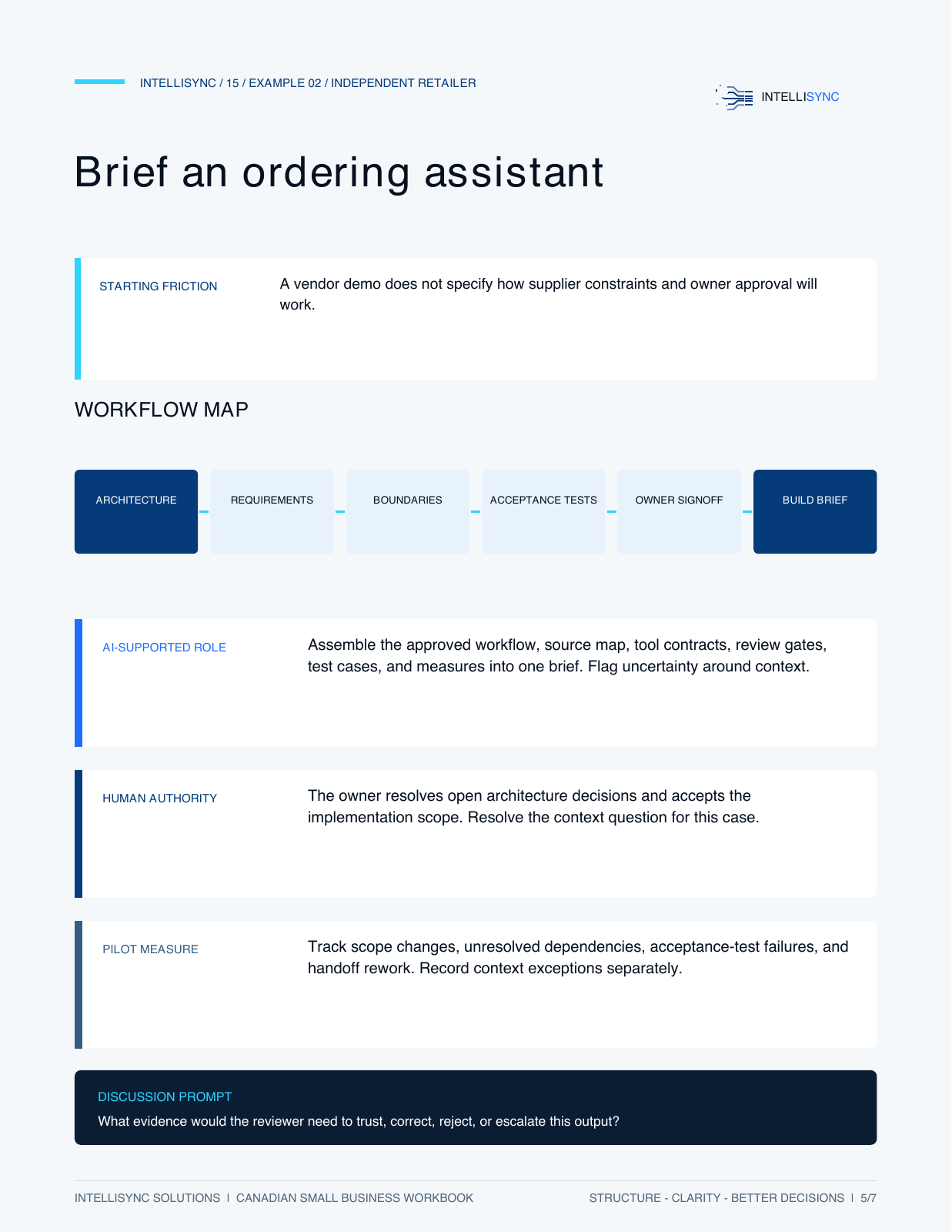
Independent Retailer
A vendor demo does not specify how supplier constraints and owner approval will work.
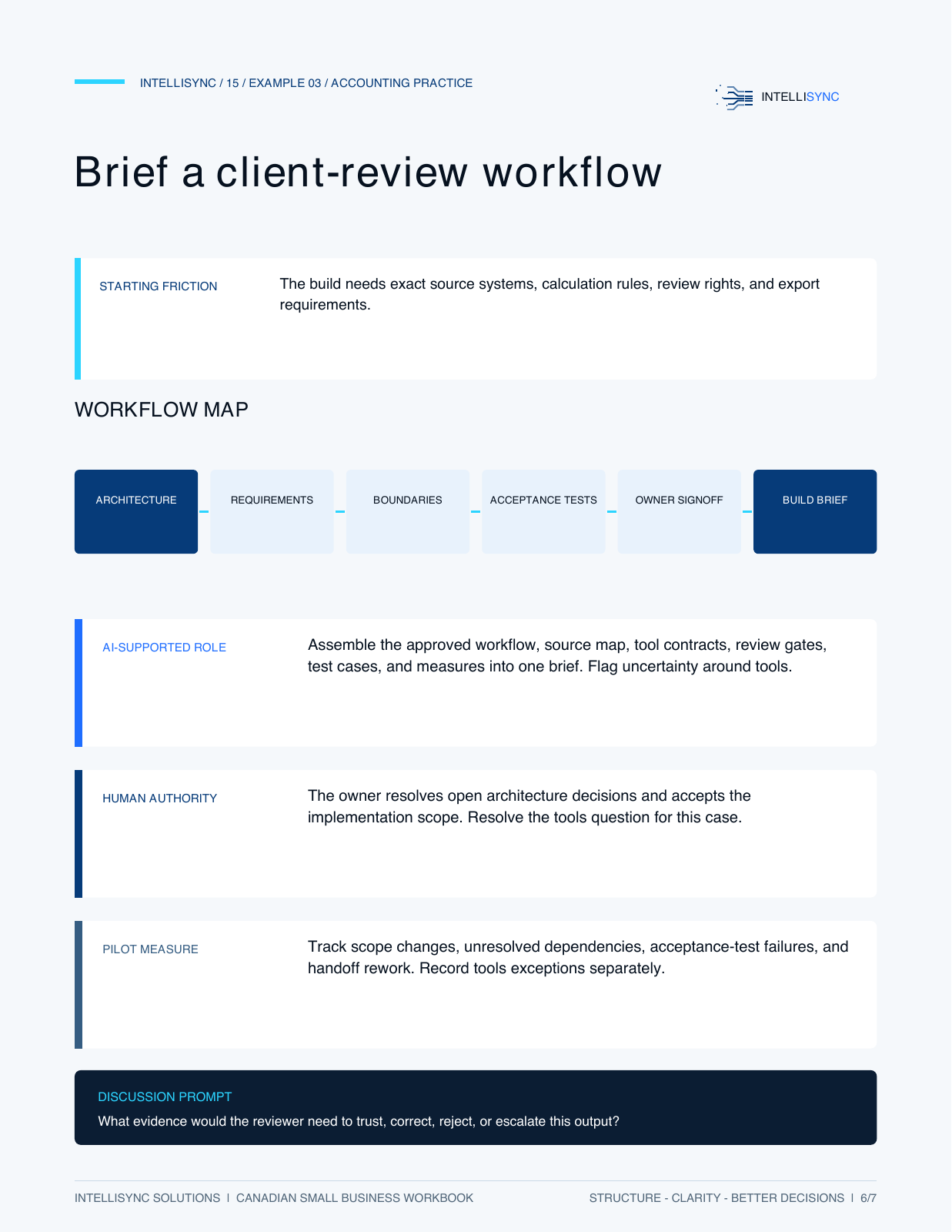
Accounting Practice
The build needs exact source systems, calculation rules, review rights, and export requirements.
Illustrative scenarios, not client results or a promise of performance. The workbook includes additional case-specific prompts.
A useful first step
Download and use it without booking a call. If you want help applying it, email Chris with the workflow you’re considering and what you want to improve.
Discuss your workflowGeneral operational guidance only. These resources are not legal, privacy, cybersecurity or regulatory advice.