Consulting Practice
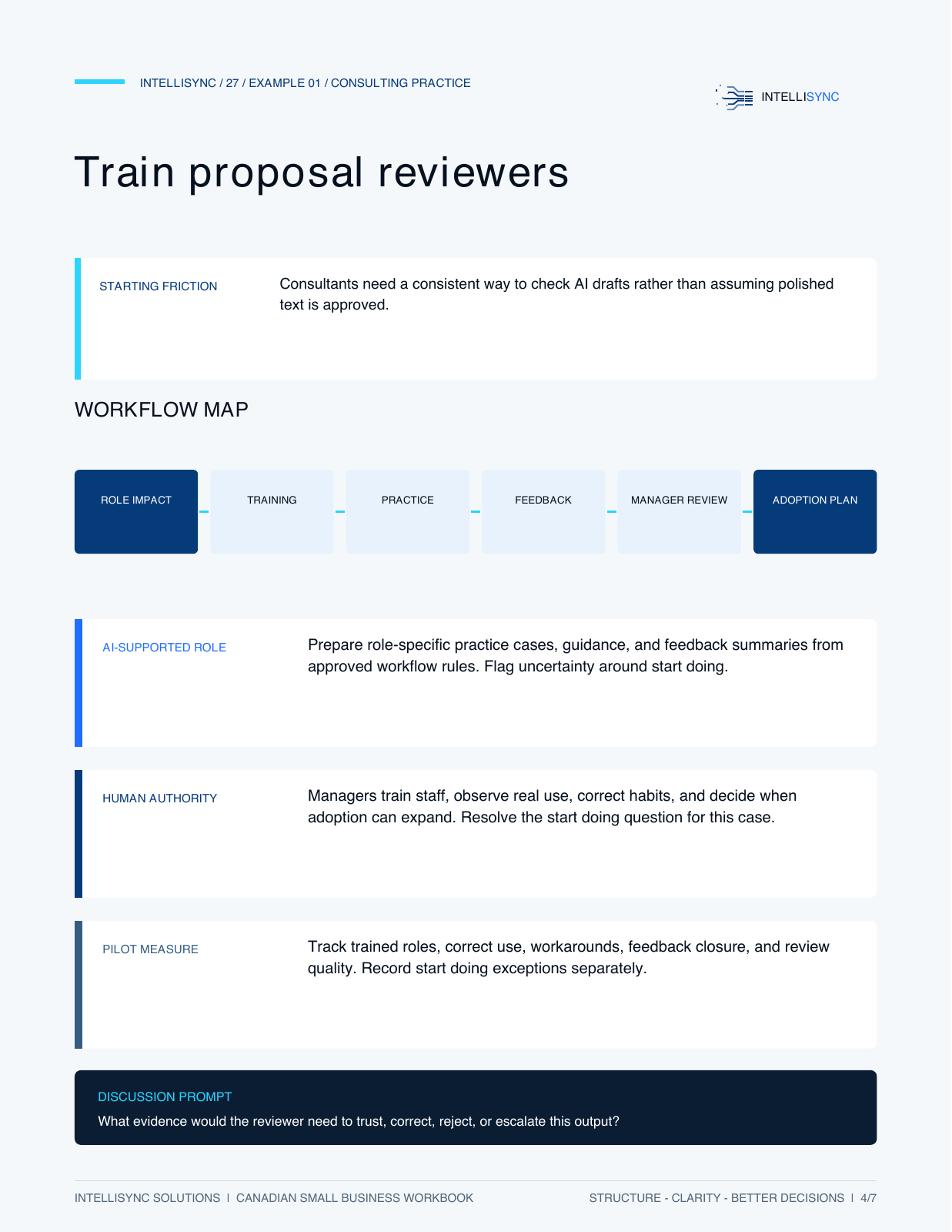
Train proposal reviewers
Consultants need a consistent way to check AI drafts rather than assuming polished text is approved.
Free Canadian small business workbook
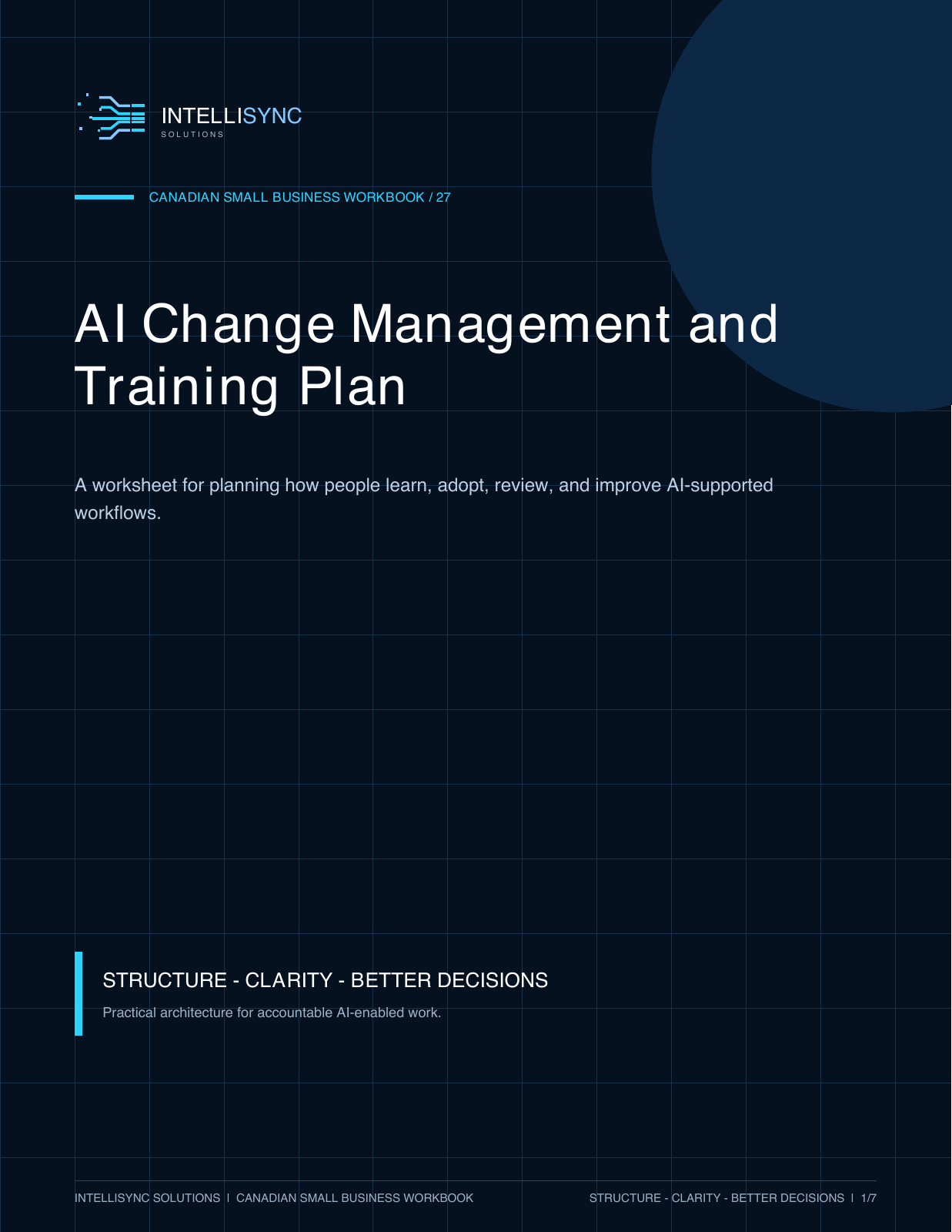
A worksheet for planning how people learn, adopt, review, and improve AI-supported workflows.
7 pages · PDF workbook · No email required
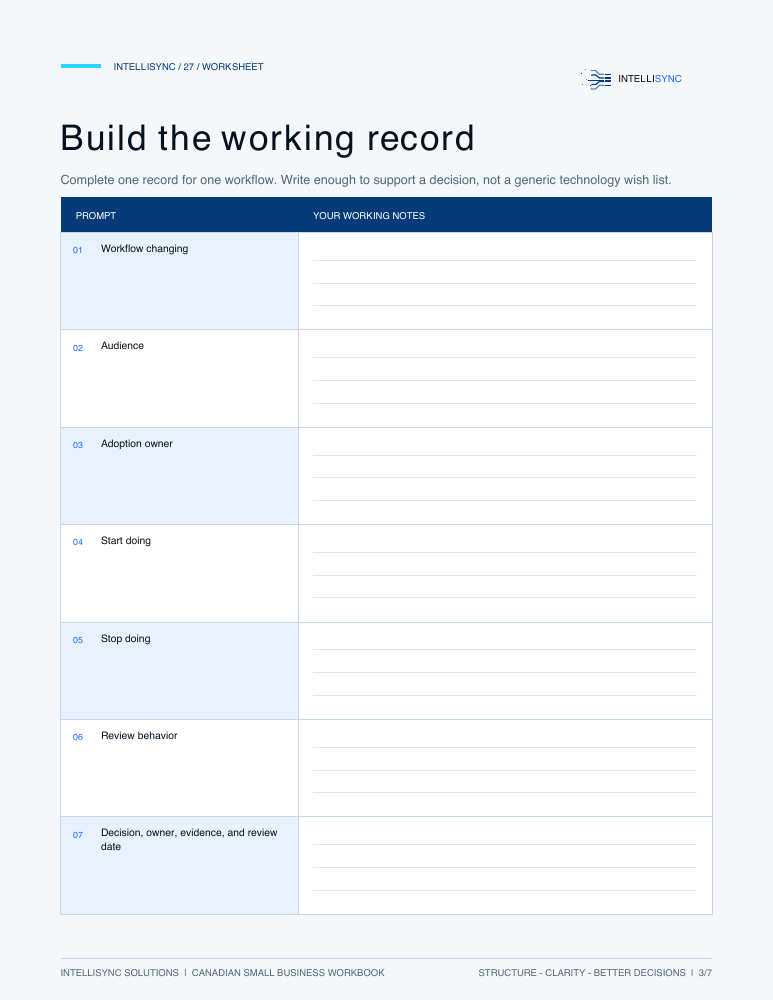
Scroll through the full workbook below. Download the PDF for selectable text, printing and your own working copy.
What’s inside
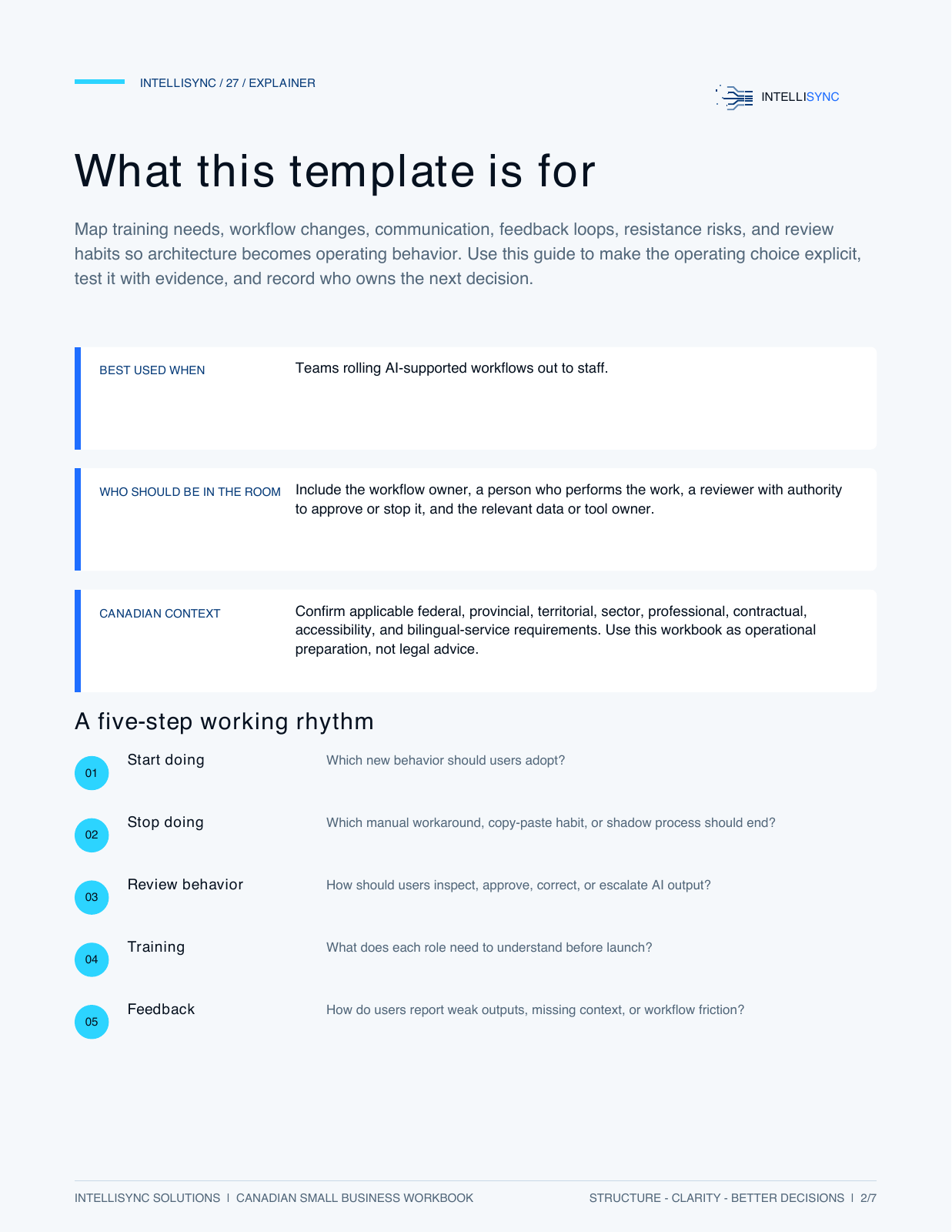
Map training needs, workflow changes, communication, feedback loops, resistance risks, and review habits so architecture becomes operating behavior. Use this guide to make the operating choice explicit, test it with evidence, and record who owns the next decision.
Teams rolling AI-supported workflows out to staff.
Include the workflow owner, a person who performs the work, a reviewer with authority to approve or stop it, and the relevant data or tool owner.
Includes an explainer, working worksheet, three illustrative examples and practical considerations. This is a planning PDF, not prebuilt automation software.
Use it with your own work
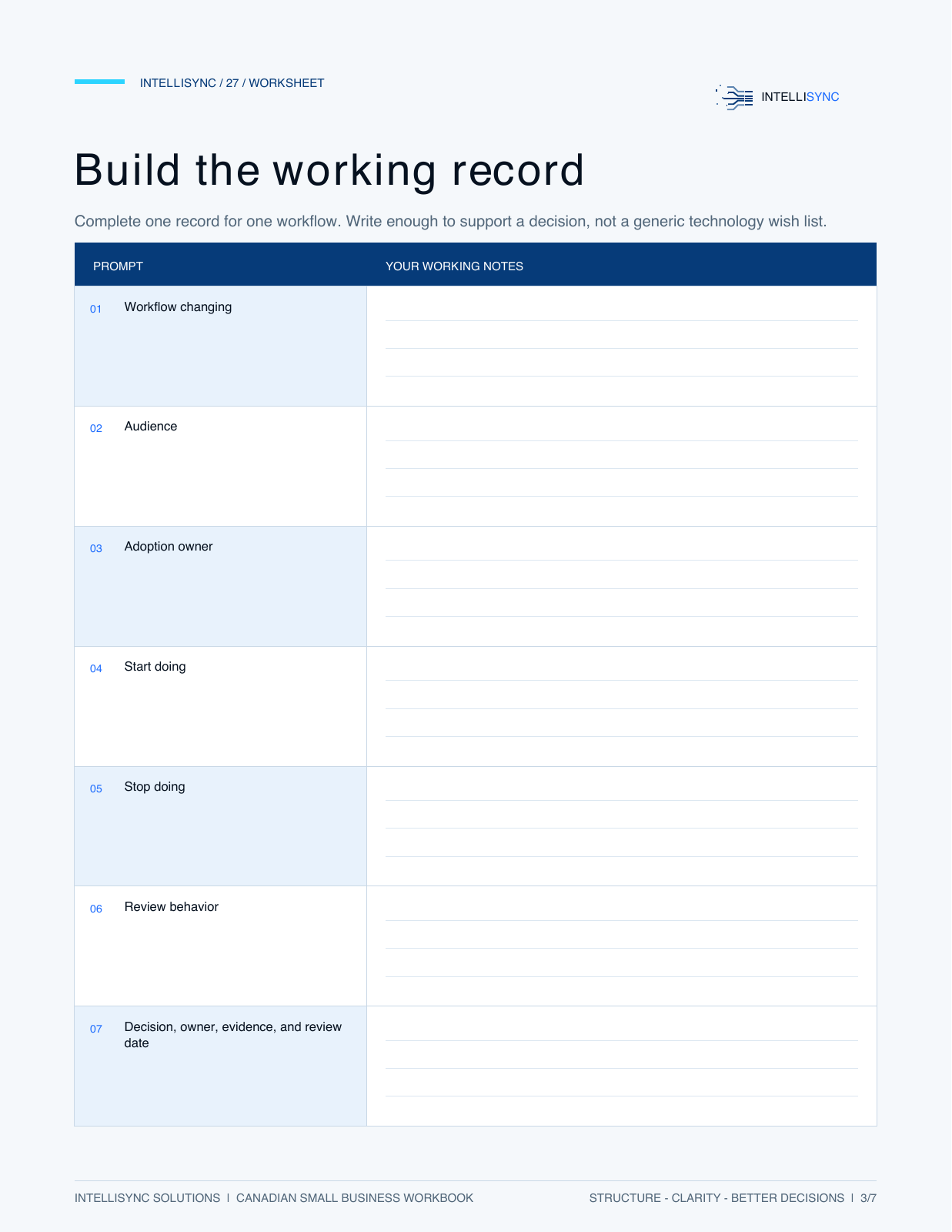
Choose one workflow. Record enough context to support a decision, then use the worksheet to name the owner, evidence and next review.
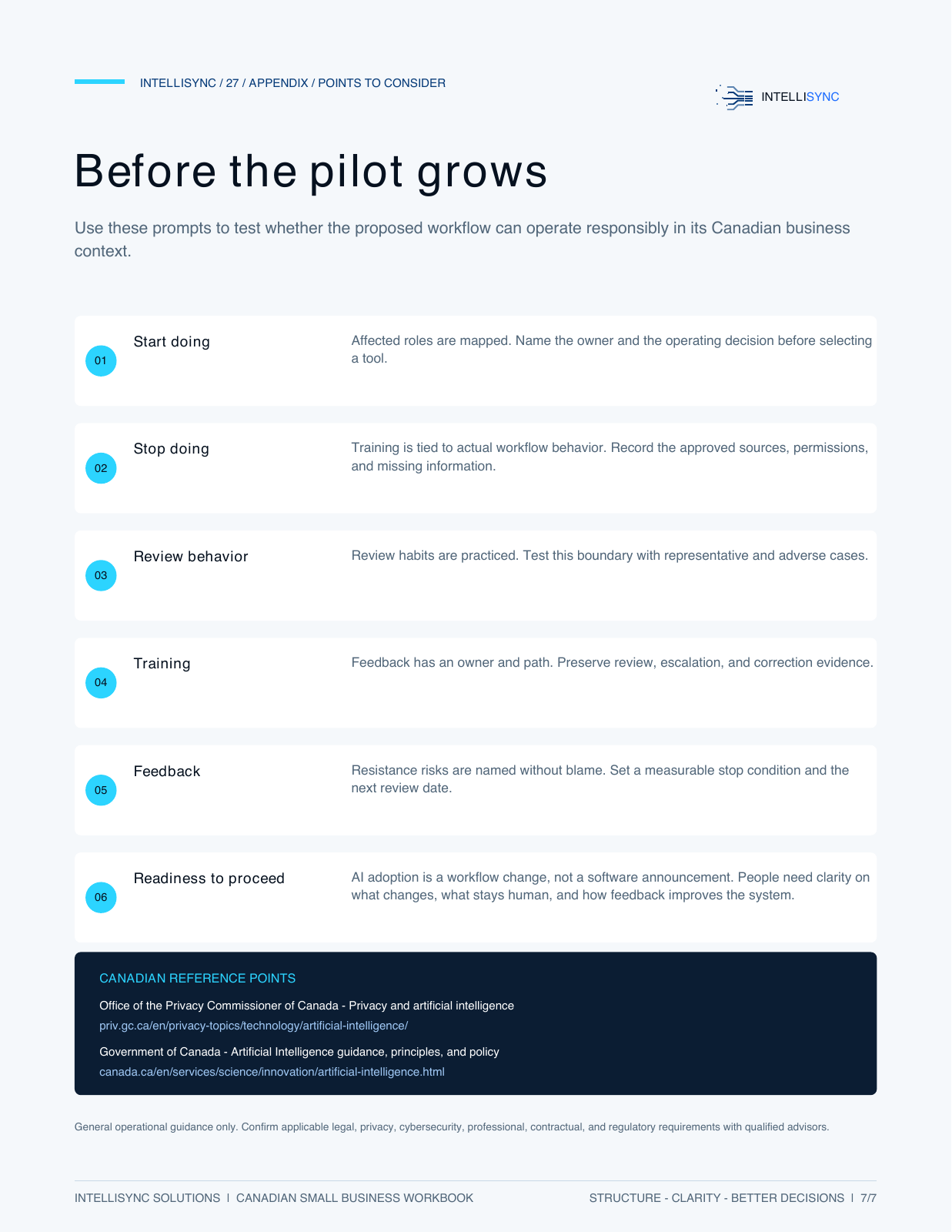
Which new behavior should users adopt?
Which manual workaround, copy-paste habit, or shadow process should end?
How should users inspect, approve, correct, or escalate AI output?
What does each role need to understand before launch?
How do users report weak outputs, missing context, or workflow friction?
Illustrative examples from the workbook
Consulting Practice
Consultants need a consistent way to check AI drafts rather than assuming polished text is approved.
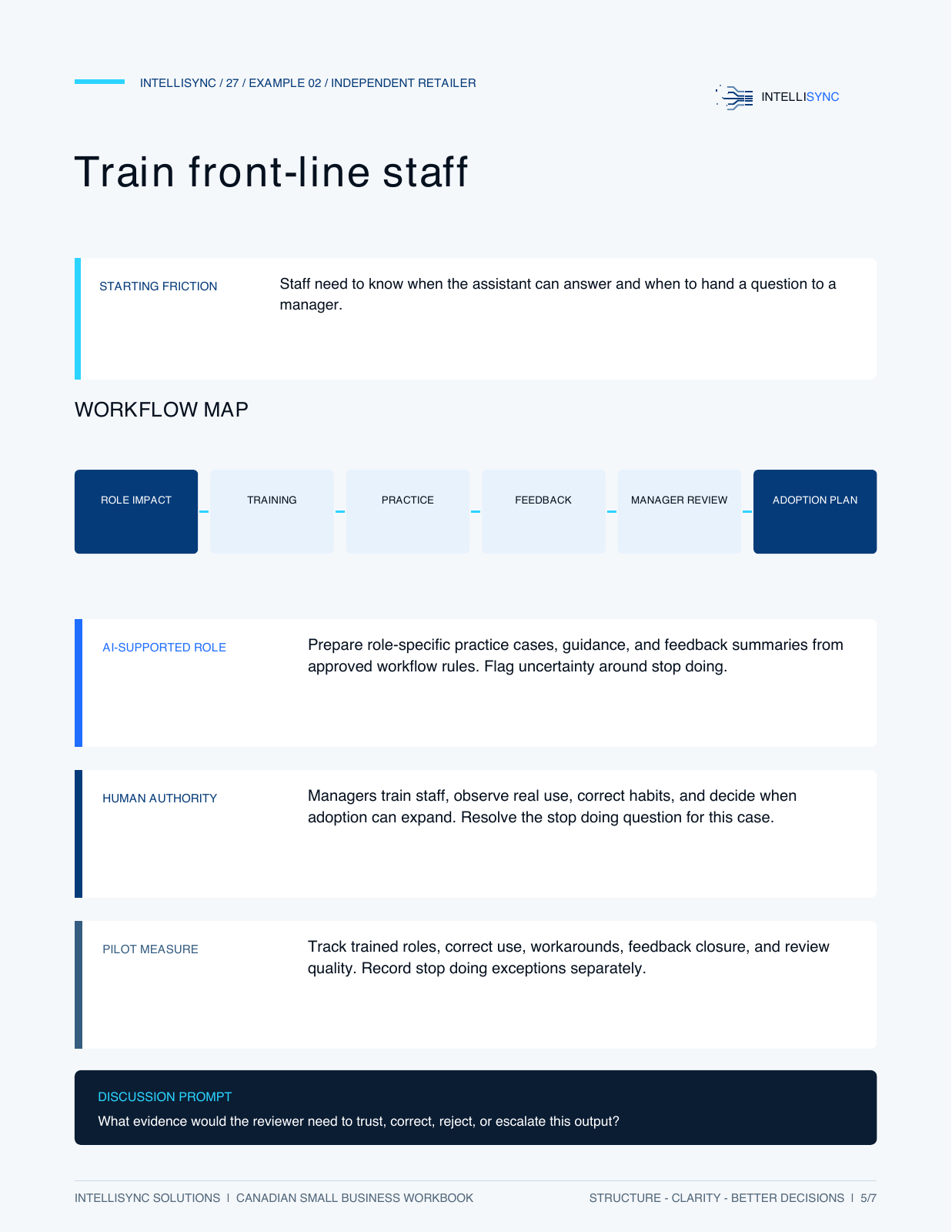
Independent Retailer
Staff need to know when the assistant can answer and when to hand a question to a manager.
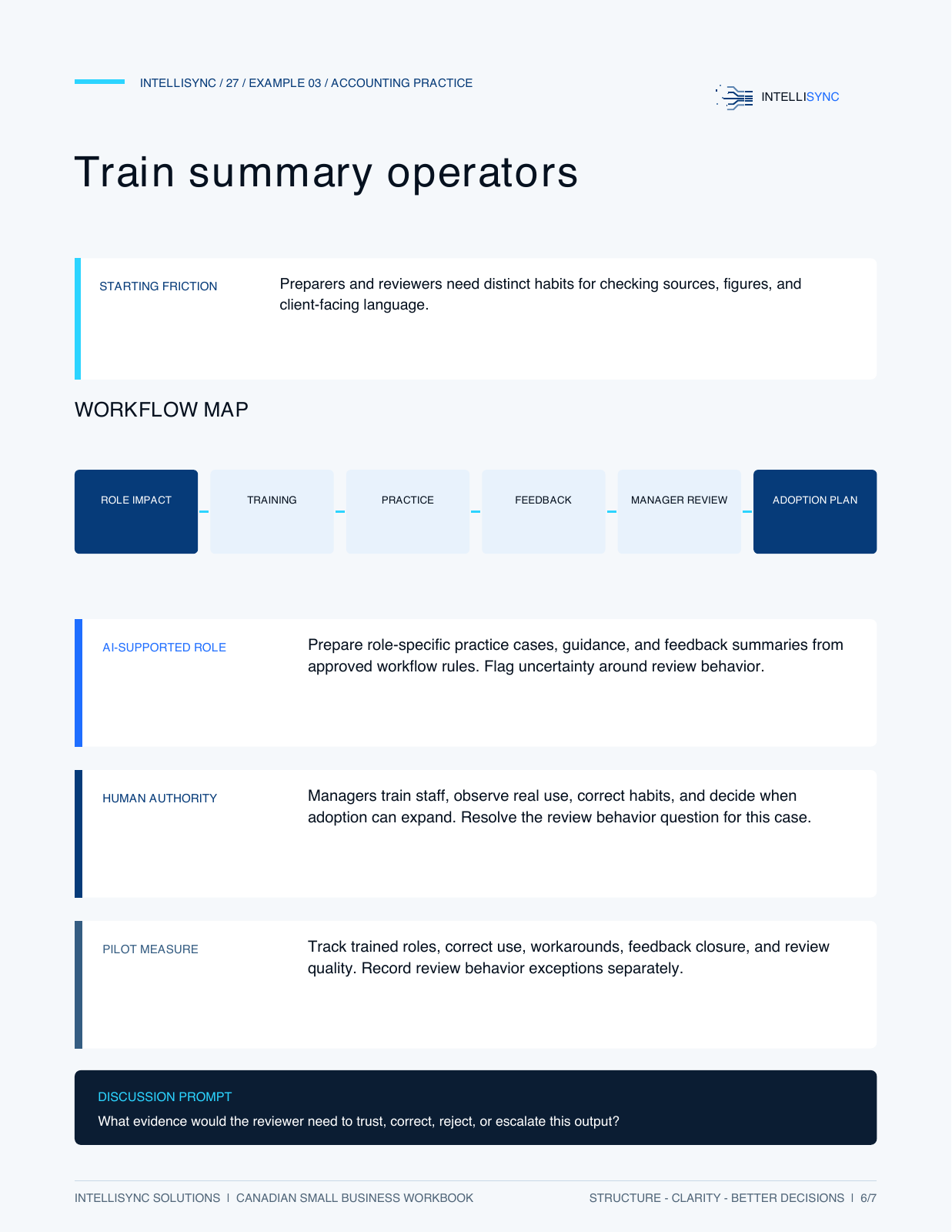
Accounting Practice
Preparers and reviewers need distinct habits for checking sources, figures, and client-facing language.
Illustrative scenarios, not client results or a promise of performance. The workbook includes additional case-specific prompts.
A useful first step
Download and use it without booking a call. If you want help applying it, email Chris with the workflow you’re considering and what you want to improve.
Discuss your workflowGeneral operational guidance only. These resources are not legal, privacy, cybersecurity or regulatory advice.